Lesson 6: How to Listen to Organ Music
Learn how to listen more deeply to organ music by noticing melody, pedal lines, layers of sound, registration changes, and the way the room itself becomes part of the music.
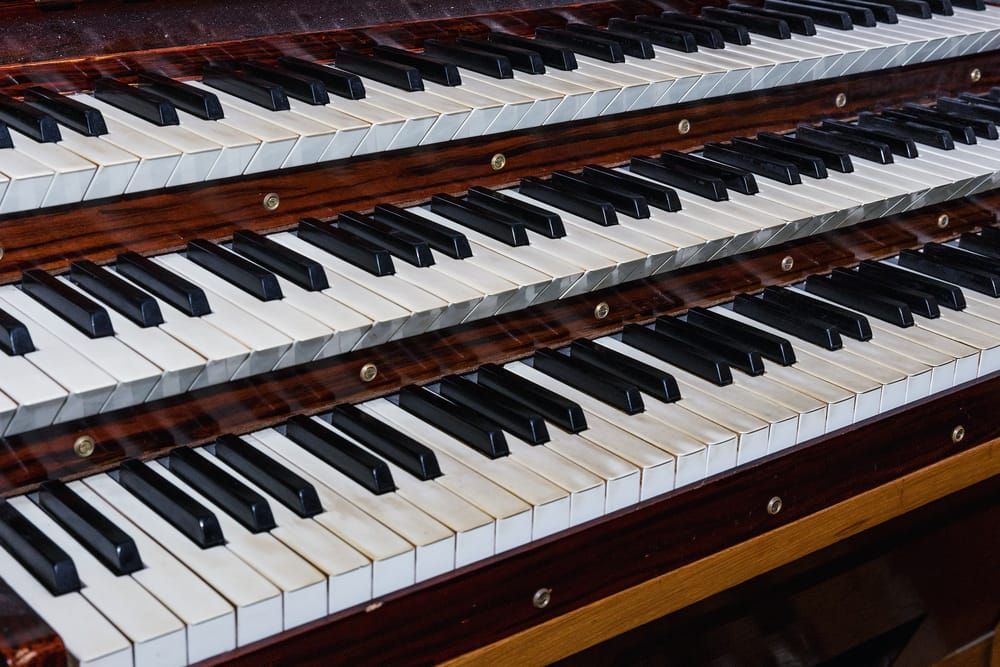
You don't need to know anything about the pipe organ to enjoy hearing one.
But once you know a few things to listen for, something interesting begins to happen.
Instead of hearing one enormous sound coming from one enormous instrument, you begin hearing choices.
A melody appears in one color.
A bass line emerges beneath it.
The sound grows, retreats, changes character, moves through the room—and suddenly you're hearing much more than you did before.
So let's try listening like an organist.
Don't Try to Hear Everything at Once
On your first hearing of a piece, simply listen.
Don't analyze it.
Don't worry about identifying stops.
Don't try to figure out which keyboard the organist is playing.
Just experience the music.
What is its overall character?
Is it joyful? Peaceful? Majestic? Mysterious? Intimate?
Where does the music seem to be going?
That first impression matters.
Then, if you listen again, you can begin paying attention to some of the details.
Follow the Melody
On your next listening, see if you can follow the principal melody.
Sometimes it will be obvious.
At other times, the melody may move from one keyboard to another or appear in a different tonal color.
Occasionally it may even be played by the organist's feet.
Don't worry about naming the stops you're hearing. Instead, notice whether the melody sounds bright, warm, delicate, bold, or perhaps dramatically different from the sounds surrounding it.
You're beginning to hear registration as part of the music.
Listen to the Feet
Yes—the organist's feet really are playing down there.
The pedalboard often provides the bass foundation while the hands play melodies and harmonies on the manuals. But the pedals aren't limited to long, low notes. They can play melodies, rapid passages, and independent musical lines of their own.
Try listening specifically to the lowest part of the music.
Can you follow it?
Does it simply support everything above it, or does it seem to have a musical personality of its own?
Once you begin consciously listening to the pedals, you'll probably notice them much more often.
Listen to the Room
Remember what we discovered earlier:
The room is part of the instrument.
An organ in a large cathedral can send sound reverberating through the building long after the organist releases the keys.
A smaller church or chapel may give the music greater clarity and intimacy.
A concert hall may offer still another balance between detail and reverberation.
Listen to what happens after a large chord.
Does the sound disappear immediately?
Or does the building seem to keep singing?
That isn't merely an interesting acoustic effect. It influences how the organist plays.
Listen for Layers
Now try separating what you're hearing into layers.
Can you identify:
the melody?
the accompaniment?
the bass?
Perhaps there's another musical line moving independently somewhere in the middle.
The original Listener's Companion encourages listeners to identify these different layers because each contributes to the richness and complexity of the music.
You don't have to give any of them technical names.
The goal is simply to discover that what initially sounded like one large mass of sound may actually contain several musical conversations happening simultaneously.
Listen for Change
One of the most enjoyable things to follow in organ music is change.
When does the sound become larger?
When does it suddenly become intimate?
Does a new section introduce a completely different color?
Does a brilliant Reed appear?
Do you suddenly hear much more bass?
If you're listening to an organist accompany a hymn, listen from beginning to end. The registration may change from verse to verse to reflect the words, mood, and shape of the hymn.
Those changes aren't accidents.
Someone sitting at the console is making musical decisions.
Listen More Than Once
Here's one of the simplest ways to become a better listener:
Play the piece again.
The original Companion suggested listening at least three times, concentrating on something different each time—the melody first, perhaps the harmony next, and then the rhythm. Additional hearings can reveal changes in registration, contrasts between manuals and pedals, and details that passed unnoticed the first time.
You don't have to turn every piece into a homework assignment, of course.
But if something catches your attention, listen again.
Very often the second hearing is where the fun begins.
Your Speakers Matter
There's one final consideration if you're listening to recorded organ music rather than hearing it live.
The pipe organ has an enormous range—from very high pitches to bass frequencies that can sometimes be felt almost as much as heard.
A tiny phone or laptop speaker simply can't reproduce all of that.
Good headphones or speakers, particularly equipment capable of reproducing lower frequencies, can reveal pedal tones, tonal colors, and details that might otherwise disappear.
That doesn't mean you need expensive audio equipment to enjoy organ music.
Just remember that if an organ recording sounds thin through your phone speaker, the organ may not be the problem.
There's No Test at the End
Perhaps the most important listening advice is this:
You don't have to identify everything you hear.
You don't need to say, “Ah yes, that's clearly an 8-foot Rohrflöte accompanied by a 4-foot Principal.”
If you someday can, wonderful.
But that's not the point.
The point is to notice more.
Maybe today you hear the pedal line for the first time.
Next time you notice the sound changing between sections.
Another day you suddenly recognize the distinctive brilliance of a Reed.
Each little discovery gives you another way into the music.
And the more closely you listen, the larger this extraordinary instrument becomes.
We've spent quite a bit of time getting to know the pipe organ itself.
Now it's time to meet some of the remarkable instruments—and composers—that helped make its history.
Comments ()