Lesson 1: What Makes the Pipe Organ Unique?
Discover what makes the pipe organ unlike any other instrument—from its extraordinary range of sounds and power to the remarkable engineering hidden behind the music.
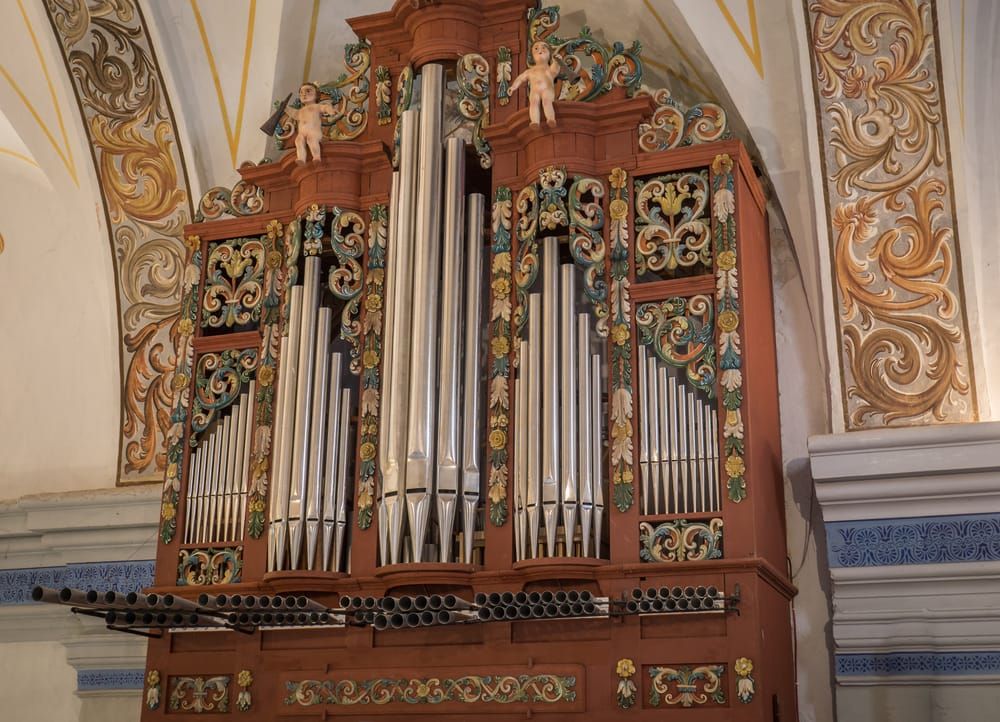
Walk into a church or concert hall with a large pipe organ and it can be difficult not to notice it.
Sometimes the pipes stretch across an entire wall. They may rise high above the room, arranged in gleaming rows. Even before anyone plays a note, the instrument can command attention.
But the size of a pipe organ is only part of what makes it unique.
Its real wonder begins when you hear it.
A Symphony in One Instrument
A pipe organ can produce an extraordinary variety of sounds.
One moment you may hear a gentle flute. Another combination of stops can suggest the warmth of strings. Reeds can add the brilliance and excitement we might associate with brass instruments. Bring many of these sounds together, and the organ can fill an enormous space with sound.
That's one reason the organ is sometimes described as an orchestra played by one person.
The comparison isn't perfect—the organ certainly doesn't replace an orchestra—but it gives us a useful way to begin listening. An organist has many different families of sound available and can choose among them depending upon the music.
Fantasy on Themes by Koji Kondo, by Sean Baran
Later, we'll explore those different sounds more closely.
From a Whisper to a Roar
The organ also has an enormous range of volume.
It can accompany a quiet prayer or meditation with sounds that seem almost to disappear into the room. It can support a congregation singing a hymn. And it can produce tremendous power during a grand musical climax.
That contrast is one of the great experiences of hearing a pipe organ live.
And unlike a piano, where striking a key harder generally produces a louder sound, the organist creates much of the instrument's variety by choosing different groups of pipes and combining them in different ways.
Those choices are called registration, and we'll devote an entire lesson to them later.
Music and Engineering Meet
Behind everything we hear is an extraordinary piece of machinery.
Pipes need air. That air has to be supplied and controlled. Keys and pedals must communicate with pipes that may be located many feet away from the person playing them.
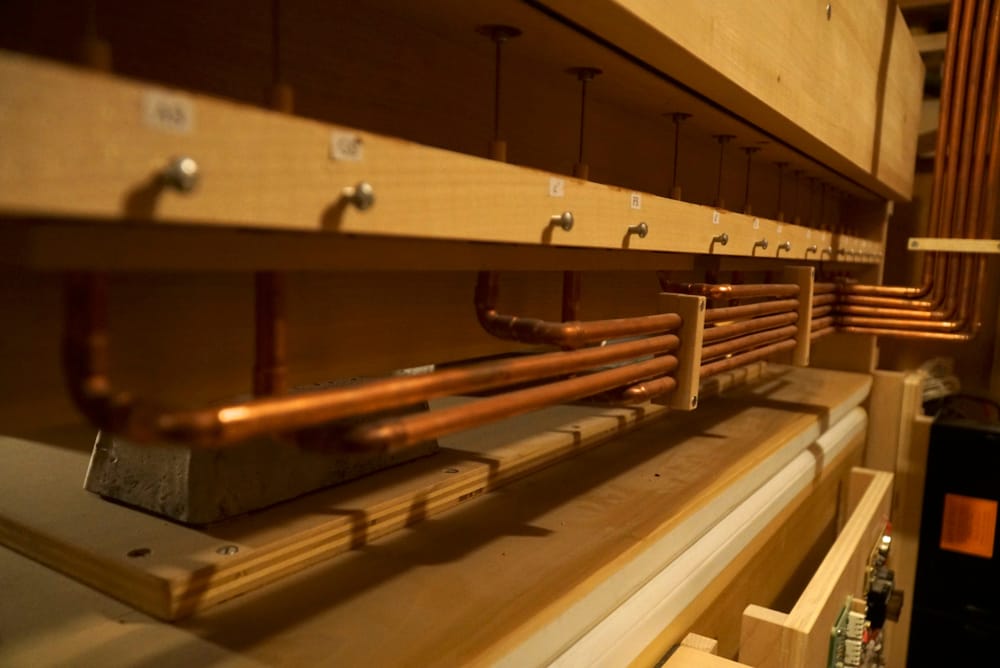
Over the centuries, organ builders have developed ingenious ways of making all of this happen. Some instruments use a direct mechanical connection between the keys and the pipes, known as tracker action. Others use different systems developed as organ technology evolved.
Fortunately, you don't need to understand all of that engineering to enjoy the instrument.
But once you know a little about what's happening behind the scenes, hearing an organ becomes even more remarkable.
We'll look inside the instrument in a later lesson—without getting too technical.
An Instrument With Many Lives
The pipe organ is strongly associated with churches, and for good reason. For centuries it has played an important role in Christian worship.
But the organ's story doesn't end at the church door.
Organs are also found in concert halls, and organ music has moved far beyond the traditional sacred repertoire. The original Listener's Companion even points to jazz organist Barbara Dennerlein as an example of musicians exploring the instrument's rhythmic possibilities, while contemporary composers have continued finding new uses for its extraordinary palette of sound.
The instrument has changed considerably over the centuries—and so has the music written for it.
Every Organ Has Something to Say
Perhaps one of the most fascinating things about the pipe organ is that there isn't simply one pipe organ.
Each instrument reflects the place in which it was built, the people who designed it, the musical traditions surrounding it, and sometimes centuries of history.
That means an organist can play the same piece on two different organs and create two noticeably different experiences.
And that's part of the adventure for the listener.
As we continue through The Pipe Organ Listener's Companion, we're going to learn what creates all those different sounds and what you can listen for when you hear them.
But before we start pulling stops and peering inside the instrument, we need to find out how this remarkable contraption got here in the first place.
Comments ()