Lesson 3: The Colors of the Organ
Discover how organists use stops and registration to shape the pipe organ’s many colors—and why the same music can sound remarkably different from one instrument to another.
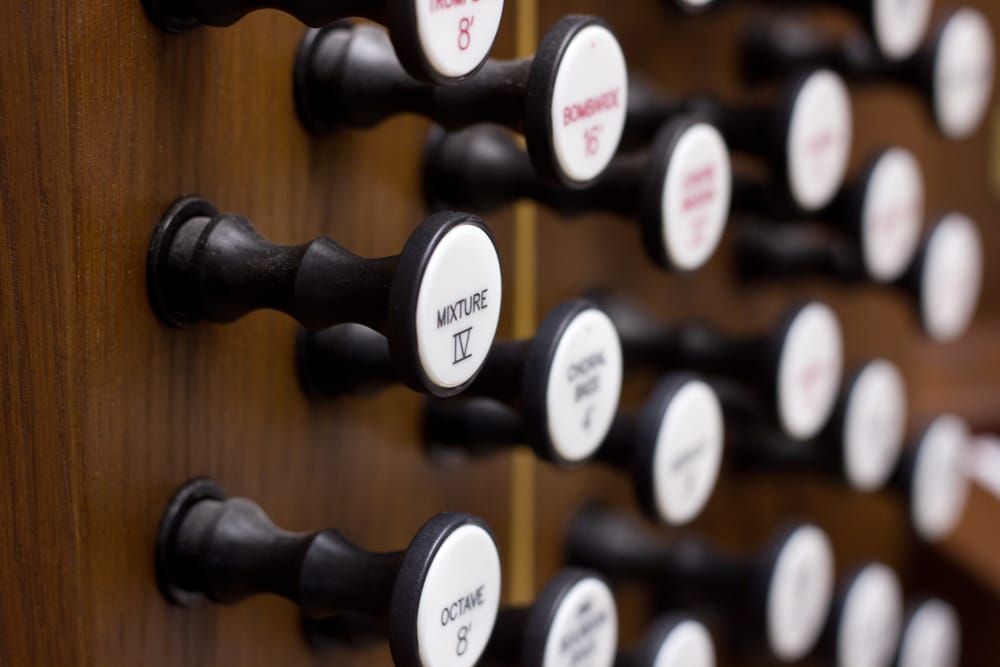
If you've ever looked closely at an organ console, you've probably noticed all the knobs, tabs, or controls surrounding the keyboards.
To someone unfamiliar with the instrument, they can look rather intimidating.
But those controls are responsible for one of the most fascinating things about the pipe organ:
They give the organist a palette of sounds.
The process of choosing and combining those sounds is called registration.
What Is a Stop?
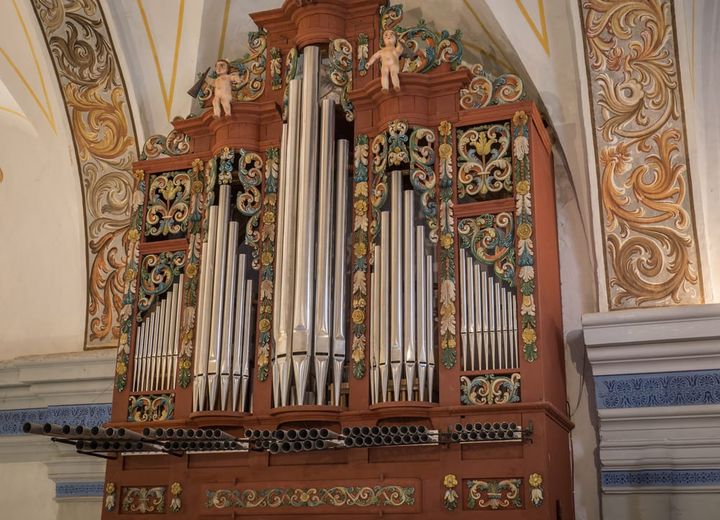
An organ contains many pipes—but they don't all sound every time the organist presses a key.
The organist uses stops to select which groups of pipes will play.
A stop might give us the clear sound of a Principal, the gentleness of a Flute, the delicate quality of a String, or the brilliance of a Trumpet or another Reed.
By selecting different stops, the organist can change the character of the instrument dramatically.
One moment we might hear a single quiet flute.
A few moments later, the organ might fill the entire room.
Same instrument.
Same organist.
A completely different color.
Stops and Ranks Aren't Quite the Same Thing
You'll sometimes hear organists use the words stop and rank.
They're related, but they don't mean exactly the same thing.
A rank is a set of pipes. A stop is the control the organist uses to bring a particular sound—or sometimes several ranks of pipes—into use.
For example, a Principal stop will commonly control a rank of Principal pipes. A Mixture, on the other hand, can cause several ranks to sound together when a single key is played.
You don't need to memorize that distinction.
For now, the important idea is simply this:
When an organist changes stops, the organ changes color.
Building a Sound
Registration becomes especially interesting when stops are combined.
An organist might begin with one sound and then add another. Different sounds can be layered to create increasingly rich combinations.
The organ's multiple keyboards—called manuals—give the organist even more possibilities. Different sounds can be assigned to different manuals, allowing the player to move between contrasting colors or combine them in different ways.
Then there is the pedalboard beneath the organist's feet, which can provide everything from a gentle bass foundation to tremendous power.
This is one reason two performances of the same piece can sound surprisingly different.
The notes may be identical.
The registration doesn't have to be.
Litany, by Mark Andersen
The Room Is Part of the Instrument
Here's something listeners don't always realize:
An organist isn't choosing sounds based only on the music.
We also have to listen to the room.
A registration that works beautifully in a large cathedral may be overwhelming in a small chapel. A combination that sounds clear in one building may become muddy in another because of the acoustics.
The original Listener's Companion described registration as something that must be tailored to the space—and that's an important part of the organist's job.
We don't simply ask:
What sounds good?
We ask:
What sounds good here?
Registration Is Interpretation
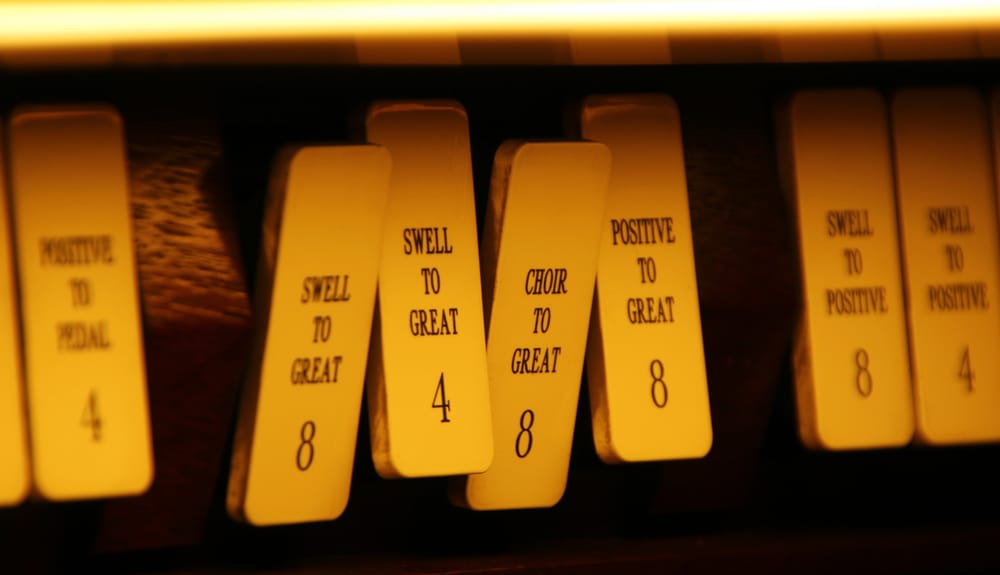
That's why registration is much more than pulling a few stops before playing.
It is part of interpreting the music.
Should this passage sound intimate?
Bright?
Majestic?
Mysterious?
Triumphant?
Should the melody stand apart from the accompaniment? Should the sound gradually grow? Should a new section introduce a completely different color?
Those are musical decisions.
The composer gives us the notes, but the particular organ sitting in front of us gives us the sounds from which we must choose.
And because every pipe organ is different, those choices may change every time an organist encounters a new instrument.
That's part of what makes playing—and listening to—the pipe organ so fascinating.
We've talked about Principals, Flutes, Strings and Reeds several times already.
But what exactly are they?
That's where we're headed next.
Comments ()