Lesson 2: How the Pipe Organ Got Here
Travel from the ancient Greek hydraulis to the great organs of Bach’s time and discover how more than two thousand years of innovation shaped the pipe organ we know today.
The pipe organ may seem perfectly at home in a church or cathedral, but that's not where its story began.
In fact, to find the organ's earliest ancestor, we have to travel back more than two thousand years—to ancient Greece.
It Started With Water
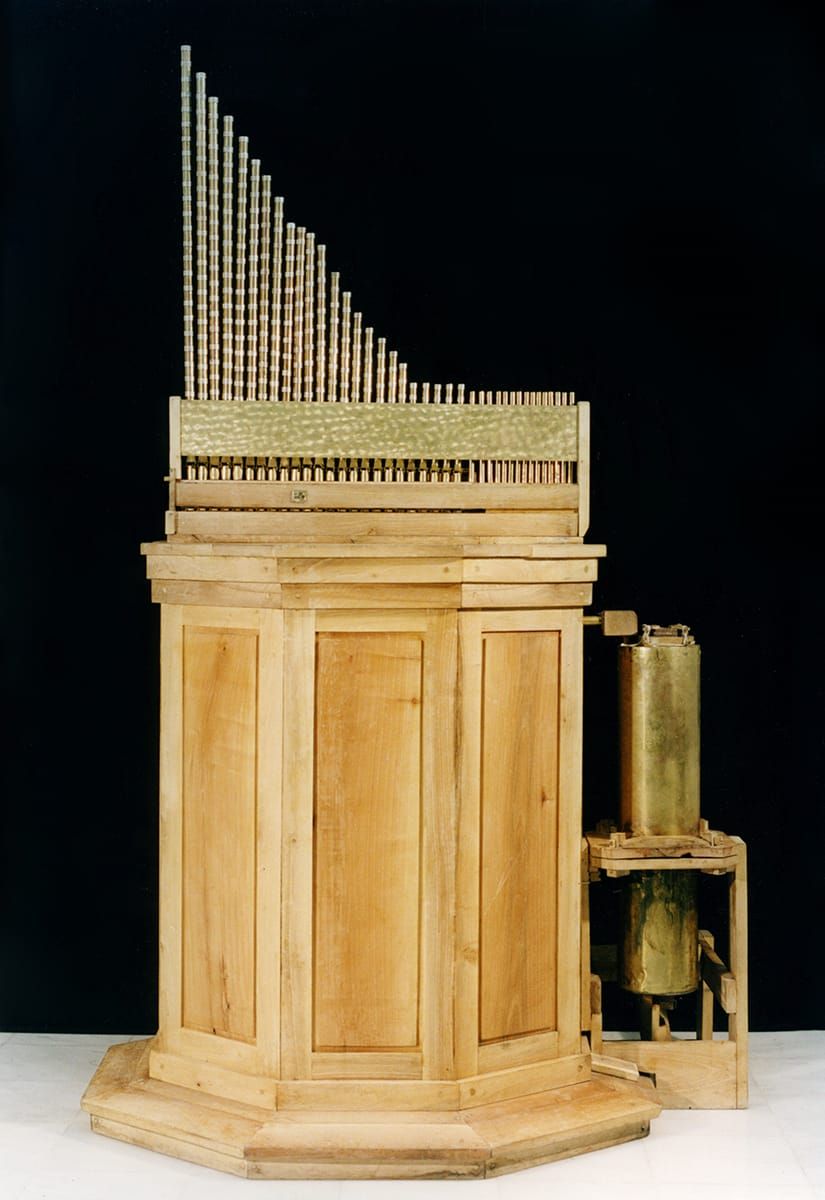
The earliest known ancestor of the pipe organ was called the hydraulis.
Developed around the third century BCE and associated with the Greek inventor Ctesibius of Alexandria, the hydraulis used water pressure to help regulate the air needed to sound its pipes.
And it wasn't created for church.
The hydraulis was an instrument of public entertainment, heard in places such as amphitheaters and royal courts.
That's quite a beginning for an instrument we now so strongly associate with worship.
From Entertainment to Worship
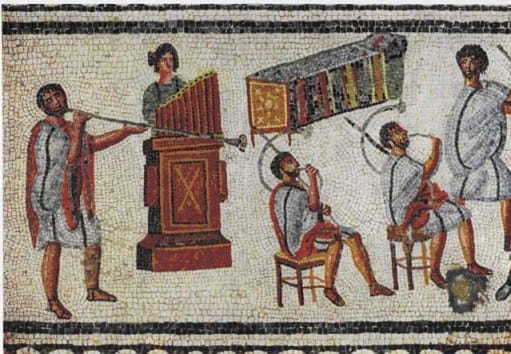
Centuries passed before the organ became established in Western Christian churches.
One important moment came in the eighth century, when Byzantine Emperor Constantine V presented an organ to the Frankish king Pepin the Short. Over time, instruments using bellows rather than water pressure developed, and the organ gradually became increasingly connected with Western Christian worship.
By the Middle Ages, organs had become an important presence in churches. The instruments themselves were also developing. Bellows supplied their wind, and eventually multiple keyboards and pedalboards expanded what an organist could do.
The instrument was beginning to look—and sound—more like the organ we recognize today.
The Baroque Organ
The seventeenth and eighteenth centuries brought one of the great periods in the organ's history.
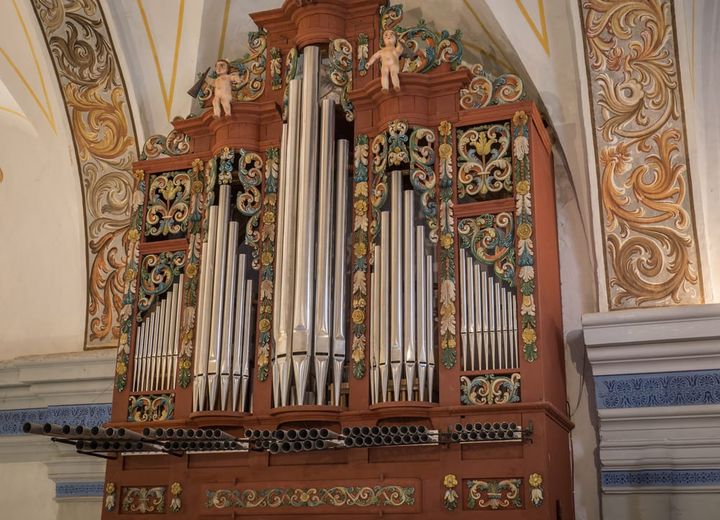
Organ builders such as Arp Schnitger and Gottfried Silbermann created instruments that combined musical ingenuity with extraordinary craftsmanship. Their organs weren't merely machines hidden somewhere in a building. Elaborate cases, carvings and pipe displays could make the instrument itself a work of art.
And then there was Johann Sebastian Bach.
Bach's organ works explored the instrument's possibilities with extraordinary imagination and helped establish a repertoire that organists and listeners continue to treasure today.
Paolo Giacone, Preludio e Fuga in Sol maggiore, J.S. Bach BWV 541
We'll meet Bach again later in our journey.
Not Everyone Wanted an Organ
The organ's relationship with worship wasn't always peaceful.
During the Protestant Reformation, reformers including John Calvin and Ulrich Zwingli objected to organs in worship, regarding instrumental music as a distraction from the simplicity they believed worship should have.
The Eastern Orthodox tradition also largely favored unaccompanied vocal music rather than incorporating the organ into its liturgy.
Even within Judaism, organs did not become part of synagogue worship until much later, particularly in the nineteenth century as some Reform congregations introduced instrumental accompaniment.
So the organ's place in religious life has never been quite as simple as we might assume from seeing one in a church today.
The Organ Keeps Changing
The pipe organ didn't stop evolving with Bach.
Modern technology brought electric blowers to replace the people who once had to operate bellows manually. New methods of controlling the instrument developed. Digital technology eventually introduced still more possibilities, including virtual pipe organs.
And organs aren't confined to churches.
They can be found in concert halls, private homes and other spaces. Their music has accompanied worship, celebrations, weddings, coronations, concerts—and, as we'll discover later, even silent movies.
Yet through all those changes, one basic idea has survived:
Air moves through pipes, and music comes out.
More than two thousand years separate the ancient hydraulis from a great modern pipe organ, but there's a family resemblance between them.
And knowing something about that long journey changes the way we look at the instrument sitting in front of us today.
Now that we know where the organ came from, we're ready to discover one of the things that makes it so fascinating to hear:
its extraordinary palette of sound.
Comments ()