Lesson 5: How a Pipe Organ Actually Works
Discover what happens inside a pipe organ when a key is pressed—from moving air and windchests to pipes, pedals, and the remarkable machinery that turns wind into music.
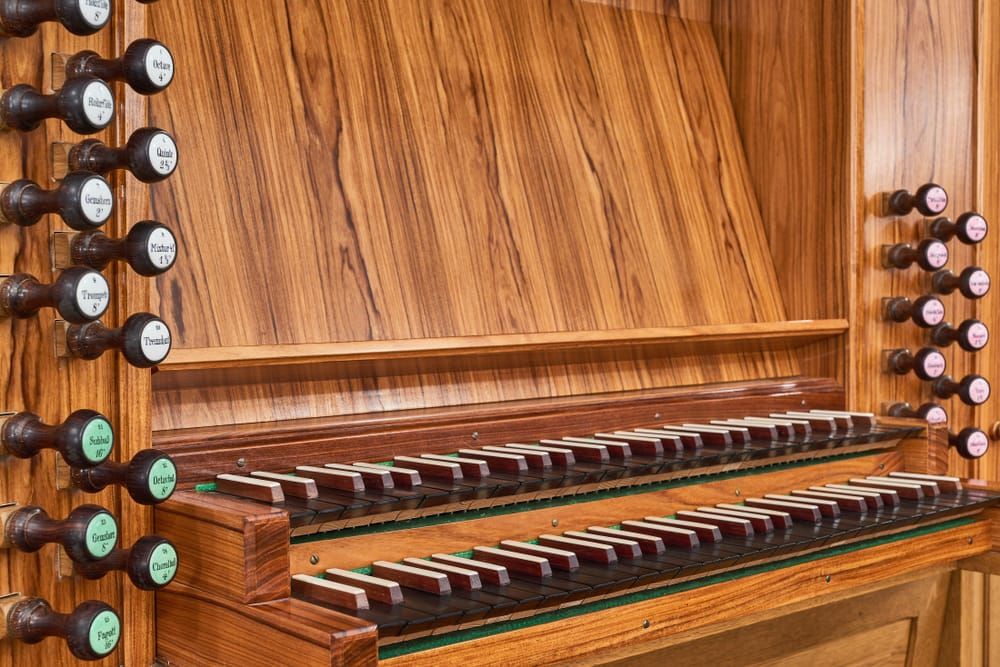
By now we've talked about stops, pipes, manuals, pedals, Principals, Flutes, Strings, Reeds, Mixtures, and Mutations.
Which may leave you wondering:
When the organist presses a key, how does the organ know what to do?
The answer can become enormously complicated.
We're not going to let it. 😄
You don't need to understand organ building to become a better listener. But knowing a few basic things about what is happening behind the console can make the instrument even more fascinating.
Everything Begins With Air
At its heart, the pipe organ is a wind instrument.
The sound begins with air.
A blower supplies pressurized air—organists usually call it wind—which is stored and regulated within the instrument. From there, the wind travels through channels toward the pipes.
But the wind doesn't simply blow through every pipe all the time.
Something has to tell it where to go.
That's where the organist comes in.
First, Choose the Pipes
Before playing, the organist selects one or more stops.
As we learned in our previous lessons, those stops determine which groups of pipes are available to sound.
Suppose I select a Flute stop.
I've essentially told the organ:
“When I play, I want to use these pipes.”
If I add a Principal, I've invited another group of pipes into the conversation.
If I add still more stops, the combination grows.
But nothing happens until I press a key.
Now Press a Key
When the organist presses a key, a mechanism allows wind to enter the appropriate pipe or pipes selected by the stops.
The pipe speaks.
Press another key, and a different pipe sounds.
Play a chord, and several notes sound together.
If several stops are selected, pressing a single key may cause several pipes to speak simultaneously.
That's the basic idea.
Select the sound. Press the key. Release the wind. Let the pipes speak.
Everything else is a more elaborate version of that process.
The Windchest
The pipes stand above something called a windchest.
Think of the windchest as a kind of distribution center.
It contains the air supply and the mechanisms that determine which pipes receive wind when the organist plays. Depending upon the design and age of the instrument, those mechanisms may be mechanical, pneumatic, electrical, or a combination of systems.
On some organs, pressing a key creates a direct mechanical connection all the way from the key to the valve beneath the pipe.
That's tracker action.
On other instruments, electricity helps transmit the organist's instructions.
Either way, the result is wonderfully simple:
The organist presses a key.
Somewhere—perhaps quite a distance away—a pipe speaks.
Why Are Some Pipes So Big?
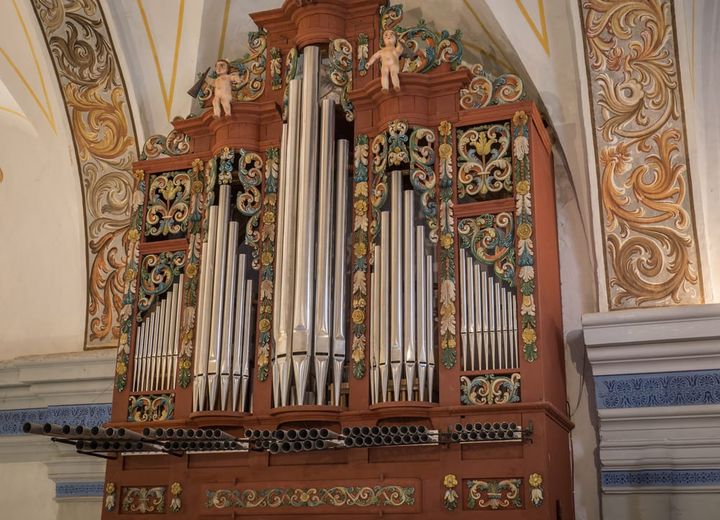
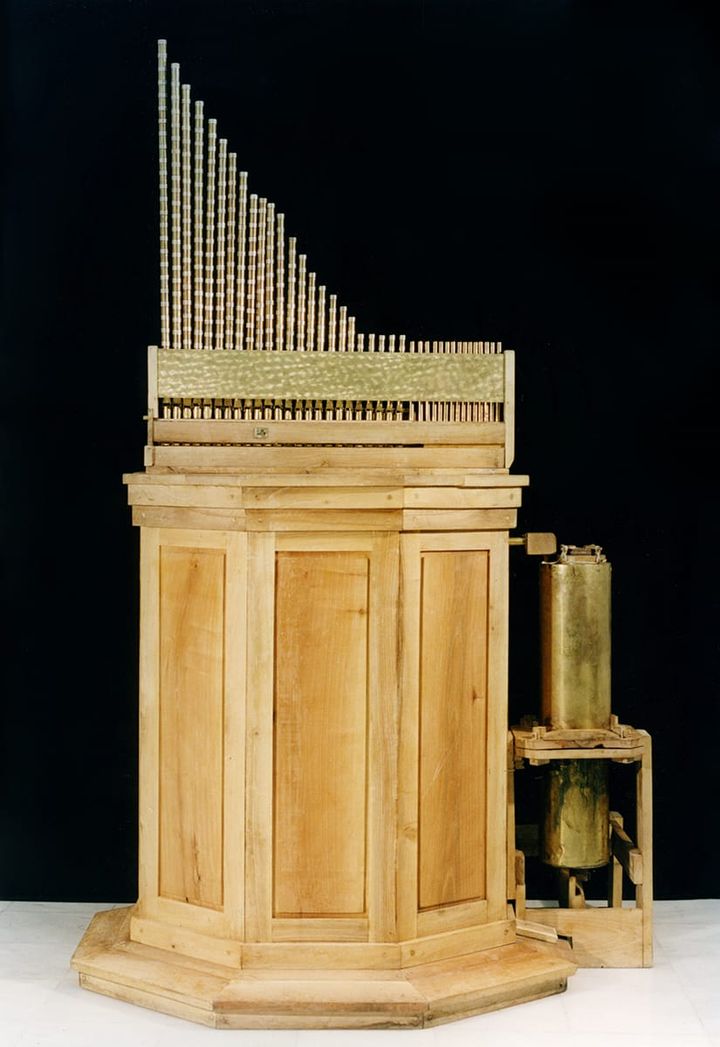
If you look at a pipe-organ façade, you'll immediately notice that the pipes aren't all the same size.
There's a reason.
The length of a pipe helps determine its pitch.
Longer pipes generally produce lower sounds.
Shorter pipes produce higher sounds.
The difference can be dramatic. Some of the largest organs contain pipes more than 30 feet long, producing frequencies so low that you may almost feel them as much as hear them. At the other extreme, some pipes can be only a few inches—or even smaller.
So when you see that enormous forest of pipes, you're not simply looking at decoration.
You're looking at thousands of individual musical voices.
Flue Pipes and Reed Pipes
Most organ pipes belong to one of two broad types.
Flue pipes produce sound somewhat like a recorder or whistle. Wind passes through an opening and causes the air column inside the pipe to vibrate.
Principals, Flutes, and Strings are generally produced by flue pipes.
Reed pipes work differently. Inside the pipe, wind causes a thin metal tongue—the reed—to vibrate. That vibration creates the distinctive character we associate with stops such as Trumpets, Oboes, and Trombones.
So when you hear a dramatic change from a gentle Flute to a brilliant Trumpet, you aren't merely hearing two different settings on the same electronic sound generator.
You're hearing pipes that actually produce sound in different ways.
And Then There Are the Feet
Of course, the organist isn't limited to the keyboards played by the hands.
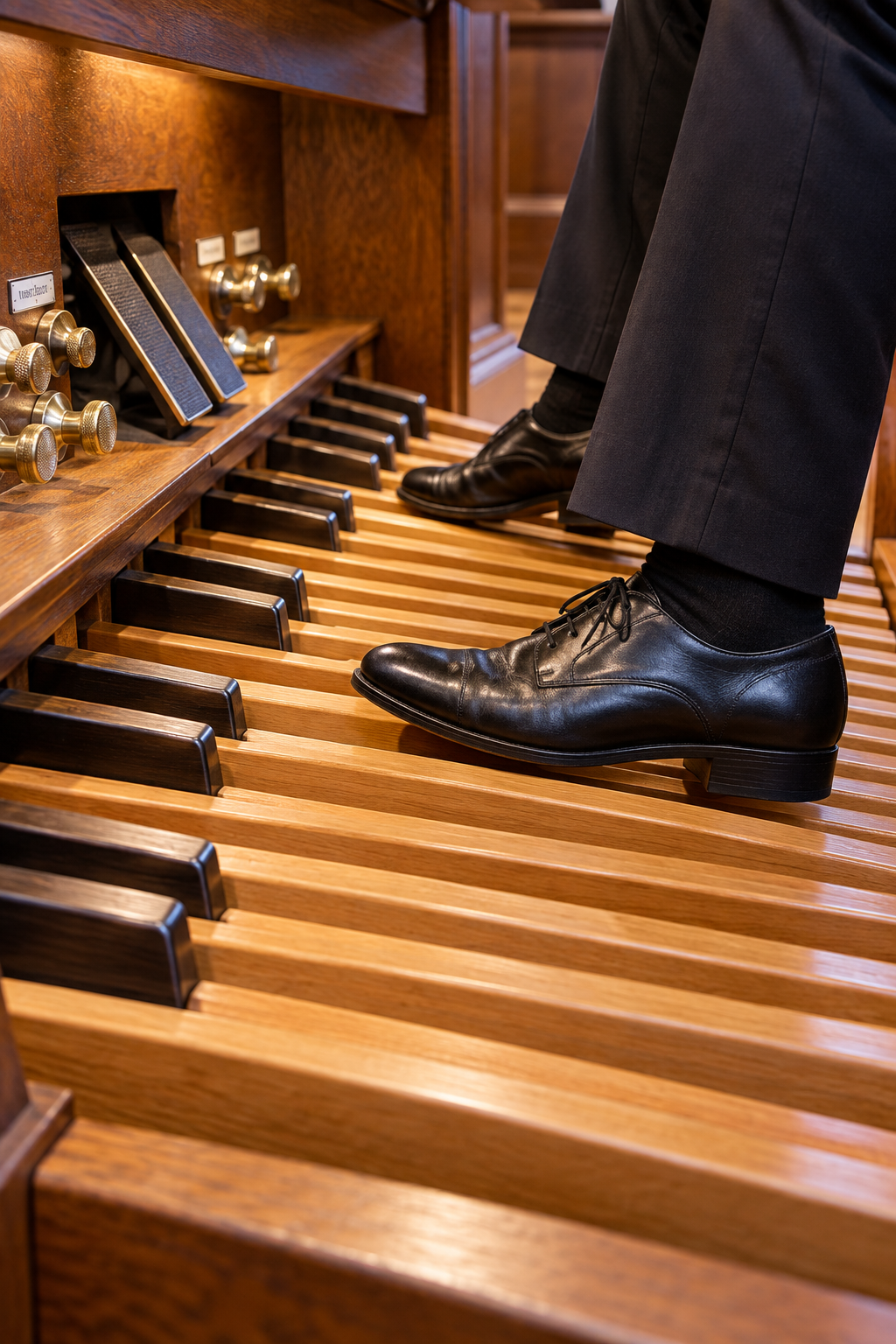
There's another keyboard on the floor.
The pedalboard is played with the feet and commonly provides the bass foundation of the music. But pedals can do much more than rumble away underneath everything else. They can play melodies, solos, rapid passages, and independent musical lines.
Sometimes the listener may not even realize that an important part of what they're hearing is being played entirely with the organist's feet.
We'll save the gymnastics lesson for another day.
Thousands of Parts, One Musical Idea
A large pipe organ can contain thousands of pipes along with an astonishing collection of valves, wind reservoirs, electrical systems, mechanical linkages, keyboards, pedals, stops, and other components.
Yet the listener doesn't need to keep track of any of them.
What matters is what all that machinery allows the organist to do:
turn moving air into music.
The next time you hear an organ, take a moment to remember what's happening behind the sound.
Somewhere inside that instrument, wind is traveling through the organ. Valves are opening and closing. Pipes of different sizes and construction are speaking. Hands and feet are controlling several musical lines at once.
And somehow all of it becomes one performance.
Now that we know a little more about what we're hearing, we can begin doing something even more interesting:
learning how to listen for it.

Comments ()